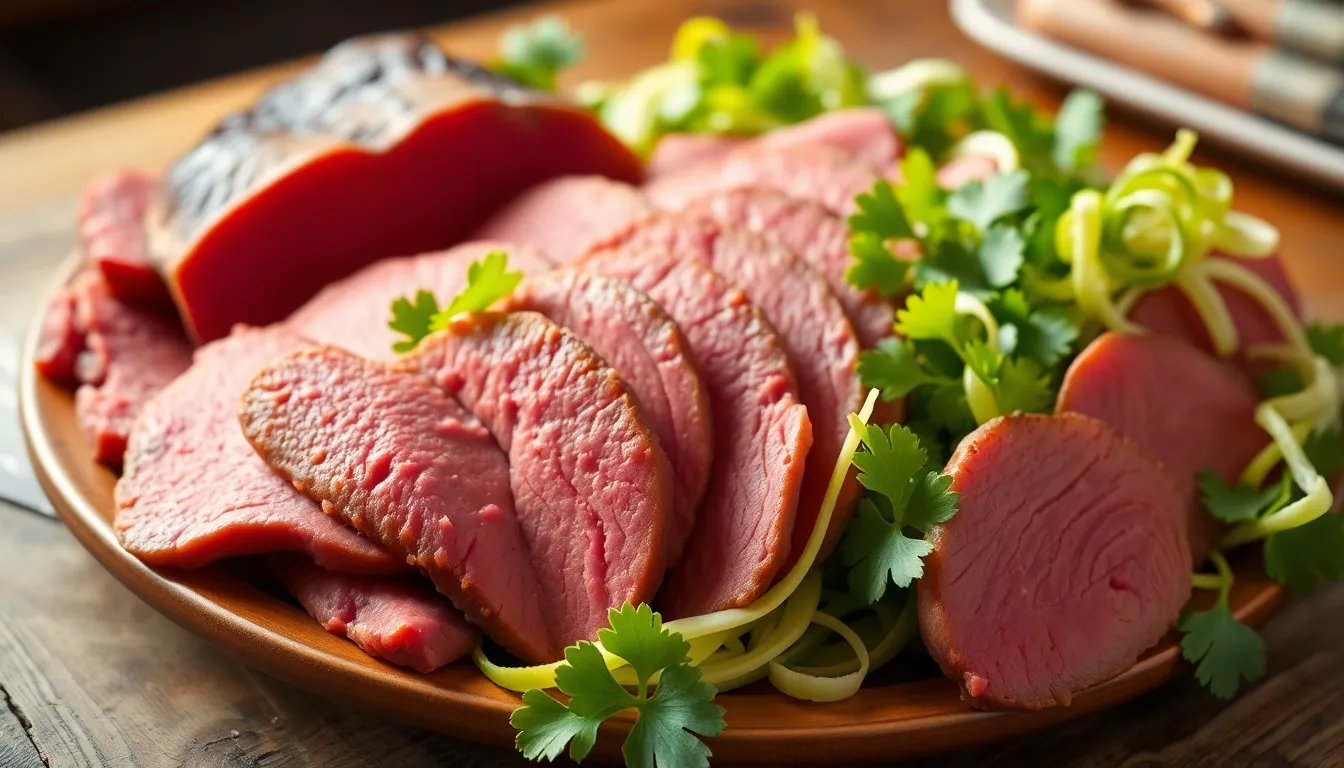
Corned beef has puzzled many food lovers, leaving them to wonder why this beloved dish carries such a quirky name. Is it because of its unique texture or perhaps its vibrant flavor? Well, it turns out the answer is rooted in history and a sprinkle of salt.
Origin Of Corned Beef
The name corned beef draws from historical salt preservation methods. Salt granules, often referred to as “corns,” were used to cure the meat, hence the name.
Historical Background
Corned beef emerged in the 17th century, primarily linked to England and its trade routes. During this period, sailors utilized salt to prevent meat spoilage. This method played a crucial role in sustaining long voyages. Irish immigrants later popularized corned beef in America during the 19th century. They often used this dish as a cost-effective protein source.
Cultural Significance
Corned beef holds significant cultural value for various communities. It especially represents Irish-American heritage, often seen during St. Patrick’s Day celebrations. The dish symbolizes camaraderie and shared experiences during feasts. In Jewish communities, corned beef is commonly featured in delicatessens and dishes, signifying tradition. This versatile meat extends beyond celebrations, becoming a staple in everyday meals in many households.
The Term “Corned”

The term “corned” in corned beef specifically refers to the process of curing meat with salt.
Definition Of Corn
Corn denotes coarse granules or grains. In the context of corned beef, these grains refer to salt crystals used in the curing method. Salt grains were historically called “corns,” signifying their importance in the preservation process. It’s essential for both flavor enhancement and meat preservation.
Etymology Of The Word
The word “corn” originates from the Old English term “corn,” meaning grain or seed. This term evolved over centuries to describe various granular substances. By the 17th century, it became synonymous with salt used for curing meat. Etymological developments reflect historical practices, linking food preservation methods to language evolution. The shift towards “corned” in descriptions emphasizes its significance in culinary culture.
Corned Beef Preparation
Corned beef undergoes a specific process that highlights its unique flavor and texture.
Brining Process
The brining process involves immersing beef in a seasoned saltwater solution, which is crucial for preservation. Salt helps to draw moisture from the meat while enhancing flavor. Typical ingredients in the brine include water, kosher salt, sugar, pickling spices, and sometimes pink curing salt, which provides a characteristic pink color. The meat usually sits in this solution for a period ranging from a few days to several weeks. This allows the salt and spices to penetrate, resulting in tender, flavorful corned beef. In home kitchens, creating a brine solution follows specific measurements to ensure balanced seasoning.
Cooking Methods
Several cooking methods exist for preparing corned beef, with each impacting taste and texture. Boiling serves as a common technique, where the brined meat simmers in water until tender, typically for around 2 to 3 hours. Some cooks prefer slow cooking; this method involves placing the meat in a slow cooker with broth and vegetables. Roasting also enhances the flavor, often starting with a quick sear on the stovetop before finishing in the oven. Each method yields moist, flavorful meat while allowing variations in seasoning and accompaniments.
Corned Beef In Popular Culture
Corned beef occupies a special place in various culinary contexts and traditions.
Culinary Traditions
Irish-American heritage prominently features corned beef, especially during St. Patrick’s Day celebrations. Families often prepare the dish with cabbage, creating a festive meal symbolizing togetherness. Delicatessens across the United States embrace corned beef, offering sandwiches that showcase its rich flavor. Jewish culture regards this dish as a traditional meal, frequently served during celebrations like Passover. Curing techniques transform the beef, adding depth to its flavor while preserving its unique texture.
Modern Interpretations
Today’s chefs explore innovative twists on corned beef, infusing it with new flavors and presentations. Gourmet restaurants experiment with corned beef by incorporating artisanal breads or unique spices. Food trucks might feature corned beef reubens, offering a modern take on a classic favorite. Meal prep enthusiasts often utilize corned beef in quick casseroles or hash, emphasizing convenience without sacrificing taste. Social media amplifies interest in this dish, inspiring home cooks to share creative recipes. Corned beef continues to evolve, attracting diverse culinary influences that celebrate its enduring appeal.
The name corned beef reflects a rich history rooted in the curing process that made it a staple for sailors and immigrants alike. Its cultural significance continues to thrive in various culinary traditions, from Irish-American celebrations to Jewish delicatessens. As modern chefs experiment with this classic dish, corned beef remains a beloved choice for many, showcasing its versatility and enduring appeal. Whether enjoyed during festive occasions or as a comforting everyday meal, corned beef’s unique name and flavorful profile ensure it holds a special place in the hearts of food lovers everywhere.