Is your fridge a chaotic jungle of expired condiments and mystery leftovers? You’re not alone. Many people open their refrigerator doors only to feel a wave of confusion wash over them. But fear not! Organizing your fridge can transform it from a disorganized disaster into a culinary paradise.
Importance Of Refrigerator Organization
Organizing a refrigerator enhances efficiency and promotes food safety. An orderly fridge minimizes food waste by ensuring visibility of items. Fresh food maintains its quality longer when properly stored, contributing to better nutrition.
Conventionally, an organized refrigerator also saves time. With clear organization, finding ingredients for meals becomes quicker, streamlining meal prep. Families benefit from discussing what’s available, making grocery shopping efficient and reducing unnecessary purchases.
Organized spaces lessen stress. Clutter creates confusion, while a neat fridge provides clarity on what to use for meals. This clarity encourages healthier eating, as individuals can quickly access fruits and vegetables instead of reaching for processed foods.
Utilizing designated areas maximizes storage. Each shelf can serve specific purposes; for example, placing dairy on the top shelf keeps it at a stable temperature. Fridge doors can hold condiments, while lower shelves are suitable for raw meats, minimizing cross-contamination risks.
Regular organization fosters accountability. Regularly throwing out expired items encourages proactive food management. Keeping a system in place reminds everyone about the importance of checking for freshness before preparation.
Incorporating organization tools such as bins and labels adds functionality. Bins group similar items, while labels clarify storage dates and categories. These small adjustments reinforce good habits and encourage mindful consumption.
Overall, prioritizing refrigerator organization results in increased efficiency, enhanced food safety, and reduced stress. Families experience significant benefits by implementing simple organizational techniques and systems.
Benefits Of A Well-Organized Refrigerator
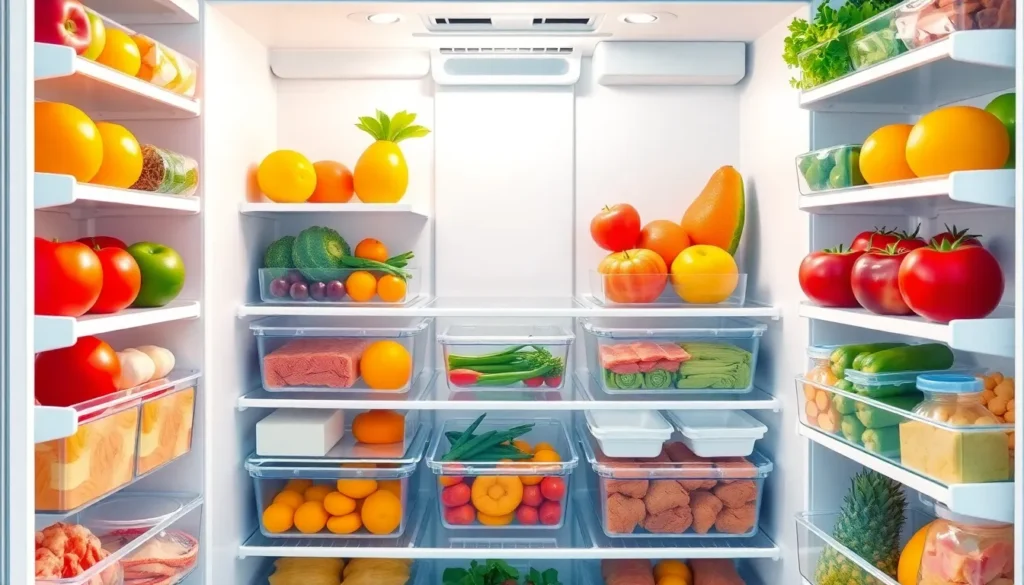
A well-organized refrigerator brings multiple advantages, enhancing everyday cooking and food storage.
Improved Food Preservation
Proper organization significantly improves food preservation. Maintaining clear visibility of fresh items ensures they are consumed before expiration. Properly stored fruits and vegetables in designated areas can extend their shelf life significantly. Grouping food by type reduces temperature fluctuations and contamination risks. Implementing clear bins or containers minimizes cross-contamination, keeping items fresh longer. On average, organized fridges reduce food waste by 30 percent, leading to more savings. Regular checks on older items further promote freshness, allowing for an efficient rotation of perishables.
Enhanced Meal Preparation
Meal preparation becomes faster and easier with an organized refrigerator. Clear visibility of ingredients encourages creativity in meal planning. Designated spaces for proteins, dairy, and vegetables streamline the cooking process. Quick access to well-organized shelves saves time during busy weeknights and reduces stress. Planning becomes efficient, allowing families to utilize leftovers and avoid overbuying. Organized fridges promote healthier choices as wholesome ingredients are more approachable. Ultimately, easy identification of seasonal produce encourages diverse meal options.
Tips For Effective Refrigerator Organization
Organizing a refrigerator effectively can transform food storage into a streamlined process. Implementing targeted strategies ensures optimal use of space.
Categorizing Food Items
Dairy products should occupy the top shelf, where the temperature remains consistent. Vegetables and fruits are best stored in the crisper drawers, with a preference for humidity control. Leftovers need clear visibility, so use a designated area on a middle shelf for quick access. Meat and seafood belong on the bottom shelf to prevent drips and cross-contamination. Grouping items based on their types allows for easier tracking and utilization, cutting down on expired foods.
Utilizing Storage Containers
Modular containers maximize space while keeping food fresh. Choose airtight containers that accommodate various sizes of produce and leftovers. When stacking items, opt for clear, labeled bins to enhance visibility and organization. Consider using smaller containers for herbs and condiments, ensuring easy retrieval. Each bin can house similar items, facilitating a more efficient meal prep process by consolidating ingredients in one area.
Implementing Labels
Labeling containers promotes accountability and encourages mindful consumption. Use washable markers or printed labels to identify contents and expiration dates clearly. Position labels on the front of containers for straightforward access. Adding dates helps track freshness, minimizing waste due to forgotten items. Groups of labeled items streamline the cooking process, allowing families to plan meals with ease while remaining aware of the stock available.
Common Mistakes To Avoid
Many individuals overlook the importance of checking expiration dates regularly. Ignoring these dates leads to wasted food and potential health risks.
Another common error involves overcrowding the refrigerator. When items are tightly packed, it becomes challenging to locate fresh ingredients, which increases the likelihood of food spoilage.
Failing to use proper storage containers is also a frequent misstep. Storing food in unsealed or non-airtight containers can cause moisture loss and accelerate spoilage.
Underestimating the benefits of labeling can diminish organization efforts. Labels on containers enable quicker identification of contents, promoting accountability and reducing waste.
Neglecting designated areas for specific food types often results in cross-contamination. For example, placing raw meat on the same shelf as ready-to-eat items poses a food safety risk.
Moreover, not utilizing the crisper drawers correctly can affect the longevity of fruits and vegetables. Each type of produce has specific humidity needs that can be optimized through proper storage.
Lastly, forgetting to clean the refrigerator regularly breeds unwanted odors and mold. Creating a consistent cleaning schedule ensures both hygiene and organization, contributing to an overall efficient kitchen space.
Embracing refrigerator organization transforms not just the space but the entire cooking experience. By implementing simple strategies and tools, individuals can create a more efficient kitchen environment that promotes healthier eating and reduces waste.
Regularly checking expiration dates and maintaining designated areas fosters accountability and ensures freshness. The benefits extend beyond just organization; they include saving time during meal prep and inspiring creativity in meal planning.
Ultimately, a well-organized refrigerator leads to a more enjoyable and stress-free cooking experience, making it easier for families to connect over meals and make informed choices.